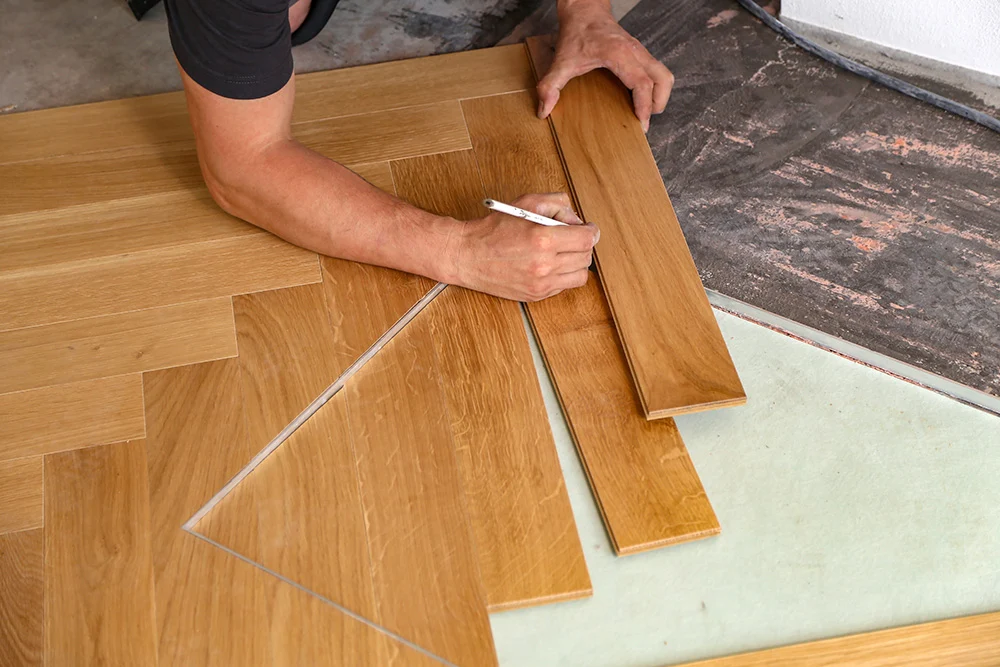
Few things undermine the satisfaction of a home renovation quite like stepping across a newly installed laminate floor only to be greeted by a sharp, plastic click or a hollow, drum-like echo. Floating laminate remains one of the most accessible and visually convincing flooring solutions on the market, but its installation method creates distinct structural and acoustic challenges. Because the planks lock together over an underlayment rather than being fastened to the subfloor with nails or adhesive, the finished floor functions as a continuous, suspended surface.
When subfloor tolerances are missed by even an eighth of an inch, or when underlayment materials are chosen strictly on price, that floating surface turns into a mechanical resonator. The resulting noises generally fall into two distinct categories: structural clicking, where interlocking tongue-and-groove profiles rub against each other under foot traffic, and ambient echoing, where air gaps beneath the boards amplify impact sounds throughout the home. Eliminating these noises requires diagnosing the underlying mechanical forces and applying targeted physical adjustments.
Diagnosing the Sound: Reverberation Versus Mechanical Friction
Before reaching for tools, it is crucial to distinguish between an acoustic problem and a structural failure. While they frequently appear in the same room, their root causes are entirely different.
A hollow echo is an acoustic issue known as impact sound reverberation. Laminate planks are manufactured from dense, rigid high-density fiberboard (HDF) topped with a hard, wear-resistant melamine resin coating. When hard-soled shoes, pet claws, or dropped objects strike that rigid wear layer, the kinetic energy has nowhere to go. If the underlayment lacks sufficient mass or fails to sit flat against the subfloor, the space beneath acts like the body of a snare drum, echoing the sound wave back into the living space.
Mechanical clicking or popping, by contrast, is a physical movement issue caused by subfloor deflection. If you step on a plank and hear a distinct snap, tick, or crunch right beneath your foot, the plank is bending downward into a localized depression. As the board deflects, its machined locking joint slides or binds against the adjacent board. The noise you hear is the friction of locking profiles under load.
Leveling Subfloor Low Spots to Eliminate Joint Deflection
The primary culprit behind clicking laminate is an uneven subfloor. Flooring manufacturers publish strict installation guidelines: a subfloor must be flat within three-sixteenths of an inch over a ten-foot radius, or one-eighth of an inch over six feet. When an installer skimps on prep work and lays laminate over dips or humps, the floating floor bridges those depressions like a suspension bridge.
Every time a person steps onto a bridged section, the planks flex downward until they meet the subfloor below. This repeated vertical travel stresses the delicate HDF locking channels, eventually shearing off the locking tongues or creating permanent joint play that clicks with every step.
If the floor is already installed and tearing it up is out of the question, you have two primary methods to stabilize these voids:
-
Injection from below: If the problem area sits over an unfinished basement or accessible crawlspace, an assistant can walk across the floor while you watch from beneath with a work light. Once the flexing spot is identified, install small wooden shims between the subfloor and joists, or drill a small pilot hole through the subfloor—taking care not to puncture the finished laminate—and inject a dense, non-expanding structural adhesive into the void.
-
Top-down expanding resin kits: For slab foundations or upper levels without ceiling access, specialized floor repair kits allow you to drill an inconspicuous, pinhead-sized hole directly through a grout line or dark wood grain pattern in the plank. Using a blunt syringe, you inject an elastomeric void-filling resin beneath the board. The resin spreads across the depression, cures into a solid support cushion, and stops the plank from bouncing downward.
Relieving Perimeter Pinch Points and Floor Tension
Floating floors expand and contract continuously with seasonal temperature shifts and relative humidity changes. To accommodate this natural movement, installers must leave an expansion gap of one-quarter to three-eighths of an inch around the entire perimeter of the room, including along baseboards, door jambs, heating vents, and vertical pipes.
When this gap is missing or blocked, the floor cannot expand outward. Instead, the expanding planks push outward, collide with the wall framing, and buckle upward at the seams in an effect known as tenting. Even a subtle, imperceptible buckle puts enormous lateral tension on the click-lock mechanisms. As you walk over a bound floor, that trapped mechanical tension releases in loud, popping snaps.
To fix perimeter binding without disassembling the floor:
-
Remove the quarter-round moldings or baseboards around the noisy area.
-
Inspect the gap between the edge of the laminate and the drywall. The planks should never touch the wall framing or drywall bottom.
-
Check the fasteners holding your baseboards. Trim nails driven at a downward angle often pierce through the laminate edge, effectively pinning a “floating” floor to the subfloor.
-
If the planks are jammed tight against the wall, use an oscillating multi-tool with a flush-cut wood blade to trim back the perimeter edge, restoring a clean three-eighths-inch gap before reinstalling the trim.
-
Verify that door casings have been undercut properly. If a door casing presses downward with heavy force onto a plank, it clamps the floor in place, creating a localized stress point that generates clicks several feet away.
Upgrading Acoustic Underlayment for Sound Absorption
If your primary grievance is a hollow, ringing echo rather than physical clicking, the failure almost certainly lies in the underlayment. Basic two-millimeter polyethylene foam sheets—frequently bundled as the cheapest option at home improvement stores—lack the physical density required to absorb acoustic shock. Over several years of foot traffic, cheap foam breaks down, compresses into a brittle, paper-thin film, and leaves widespread hollow pockets.
High-performance acoustic control requires materials with substantial mass and high Impact Insulation Class (IIC) ratings:
-
Dense recycled fiber felt: Manufactured from compressed synthetic or wool fibers, felt underlayment provides extraordinary sound-deadening mass. It absorbs downward impact noise while supporting the floor’s locking joints under heavy loads.
-
Natural cork: Cork possesses an internal cellular structure made of millions of microscopic air pockets that disperse acoustic vibration. It will not crush permanently over time, making it one of the most durable sound buffers available.
-
High-density rubber and heavy EVA foam: Engineered rubber underlayments are exceptionally effective at deadening airborne echoes and preventing sound transmission into rooms below.
For homes where the floor is already laid and replacing the underlayment is financially impractical, adding dense area rugs with natural felt pads is the most effective surface-level solution. Placing heavy rugs across high-traffic pathways breaks up the hard reflective plane, preventing foot strikes from echoing through the room while absorbing ambient sound waves bouncing off walls and ceilings.
Friction Relief for Localized Joint Squeaks
Occasionally, a floor is perfectly flat and possesses adequate expansion gaps, yet a handful of individual joints squeak or tick due to micro-roughness in the factory-milled tongue-and-groove profiles.
To resolve localized friction without damaging the core material, apply a dry PTFE lubricant (polytetrafluoroethylene spray) or finely milled technical graphite powder into the offending seam. Work the dry lubricant down between the planks using a soft-bristled brush or by placing a clean cloth over the seam and gently stepping on the joint to work the particles into the lock.
Never use household oils, WD-40, or water-based liquid soaps to silence a squeak. Standard laminate cores are made of compressed wood fibers that absorb moisture rapidly. Liquid lubricants will cause the fiberboard core to swell permanently, ruining the joint profile and turning a minor click into an irreversible, raised ridge across your floor.
A quiet, solid-feeling laminate floor is always the byproduct of thorough subfloor leveling, disciplined expansion tolerances, and high-density acoustic dampening. By methodically identifying whether your floor suffers from air-gap reverberation, perimeter binding, or joint deflection, you can target the root mechanical cause and restore lasting quiet to your living space.


