close

Bathroom

Bathroom

Modern Bathroom Design Trends That Are Changing Residential Interior Spaces

For generations, the American residential bathroom was conceived almost exclusively through the lens of utilitarian efficiency. Tucked into standard five-by-eight footprints, lined with sterile white ceramic, and hidden behind solid doors, these rooms were designed to facilitate morning routines as quickly as possible. They were machines for hygiene, rarely spaces for lingering.
Over the past several years, that practical detachment has given way to a profound architectural shift. Homeowners and interior architects now treat the primary bathroom not as a functional necessity, but as an essential personal retreat and a centerpiece of residential design. As open-concept living continues to blur the boundaries between domestic zones, the bathroom has evolved into an experiential environment where materials, lighting, and layout prioritize sensory restoration, ergonomics, and spatial tranquility.

The Curbless Wet Room and Spatial Continuity

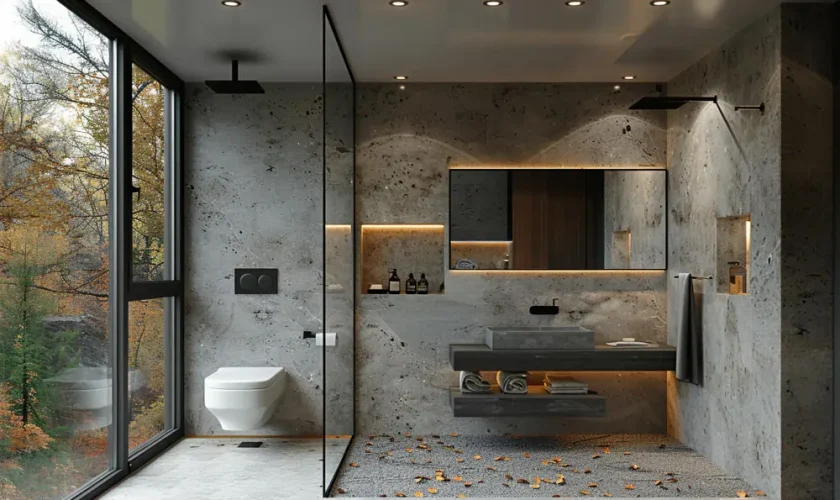
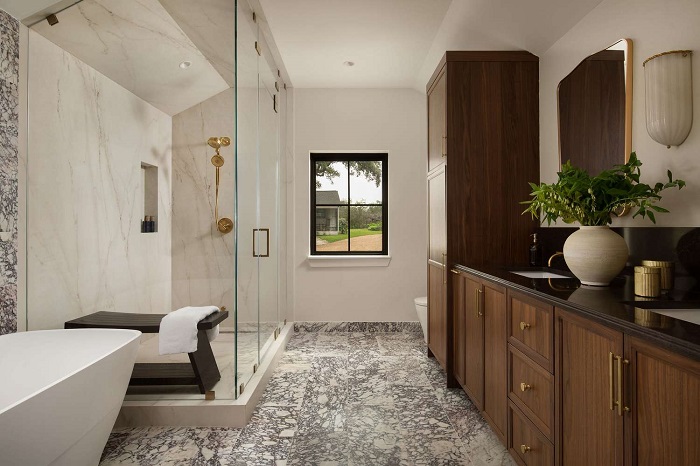
The most significant structural evolution in contemporary bathrooms is the eradication of visual and physical barriers. Traditional framed glass shower enclosures with high acrylic thresholds and sliding tracks are rapidly disappearing from modern renovations. In their place, designers are adopting the curbless wet room concept, creating a continuous, unbroken floor plane that stretches across the entire space.
By eliminating the raised curb, the bathroom immediately gains visual volume. Small rooms feel expansive because the eye is not stopped by floor-level dividing lines or heavy metal frames. Achieving this seamless transition requires pitching the shower floor gradually toward a hidden linear trench drain, often set flush against the rear wall or beneath a floating glass partition.
Beyond its dramatic visual appeal, the wet room fundamentally embraces universal design. The flat, uninterrupted threshold effortlessly accommodates varying life stages and mobility needs without carrying the clinical aesthetic once associated with accessible architecture. It is an engineering achievement that marries understated luxury with lifelong practicality.

Tactile Materiality: Moving Past the Sterile White Box

The era of the all-white, high-gloss bathroom is decisively over. Homeowners have grown fatigued by the cold, reverberant surfaces reminiscent of institutional spaces. Current design language focuses on warmth, depth, and organic tactility, turning to materials that invite touch and soften acoustic sharpness.

Monolithic Plasters and Microcement

Grout lines have long been the aesthetic and maintenance headache of bathroom walls. Modern bathrooms are increasingly turning to seamless alternatives like tadelakt and microcement. Originating as an ancient Moroccan plastering technique, waterproof lime-based tadelakt cures into a silky, water-repellent surface with subtle tonal variations that catch daylight beautifully. Microcement delivers a similar monolithic quality with an industrial edge, providing continuous, grout-free wall finishes that resist mold and require minimal scrubbing.

Fluted Millwork and Honed Natural Stone

To balance these expansive plaster or concrete surfaces, contemporary design introduces natural timber. Where polished marble and glossy subway tiles once dominated, designers now specify warm white oak, walnut, and teak vanity units, often treated with ribbed or fluted details that introduce fine shadow lines and visual rhythm.
Countertops and basins have shifted toward honed or leathered natural stones—such as quartzite, travertine, and dense soapstone—rather than reflective, high-gloss polished granite. These matte, textured finishes celebrate the raw, imperfect grain of the earth, reinforcing an organic connection that grounds the entire room in quiet sophistication.

Invisible Technology and Friction-Free Comfort

Residential technology often stumbles when it draws too much attention to itself. The most enduring modern bathroom innovations are those that operate invisibly, improving comfort and hygiene without cluttering surfaces with garish screens or blinking lights.
At the forefront of this shift is the integration of smart bidet toilets. Once seen as a niche luxury imported from overseas, wall-hung smart commodes featuring automated self-cleaning cycles, heated seats, customizable water temperatures, and integrated air purification have become a benchmark in upscale renovations. Mounting the bowl directly to the wall framework conceals the water tank behind drywall, creating a sleek silhouette that frees up valuable floor space and simplifies floor cleaning.
Simultaneously, plumbing engineering has embraced digital precision. Thermostatic digital shower valves allow users to activate custom temperature presets with a single touch, maintaining water heat within a fraction of a degree regardless of pressure changes elsewhere in the home. Paired with quiet, programmable radiant floor heating systems that warm cold stone tiles underfoot, modern bathroom technology focuses entirely on eliminating everyday friction.

Sculptural Vanities and Floating Architecture

Furniture in the modern bathroom is designed to hover. Bulky, floor-mounted cabinetry that runs corner-to-corner is yielding to floating vanities that expose the continuous flooring beneath.
Lifting cabinetry off the finished floor creates negative space, making the entire room appear larger and lighter on its foundation. These vanities are increasingly conceived as freestanding pieces of fine furniture, featuring integrated stone trough sinks, soft-close mitered drawers, and open lower shelves for rolled linen storage.
Wall-mounted faucets have emerged as the natural companion to this floating aesthetic. By routing supply plumbing through the wall studs rather than through the vanity deck, homeowners gain clean, uncluttered countertops that are effortless to wipe down. Finishes have also shifted away from high-shine polished chrome toward living finishes such as unlacquered brass, matte bronze, and brushed nickel, which age naturally alongside the home and resist water spots.

The Architecture of Atmospheric Lighting

Few elements dictate the emotional tone of an interior space as decisively as illumination. The historical approach of placing a harsh multi-bulb fixture directly above the vanity mirror casts unflattering shadows across the face and washes out the room with aggressive glare.
Modern bathroom design relies on layered, indirect lighting schemes that adapt across the day:
  • Concealed perimeter LED coves tucked into ceiling recesses or beneath floating vanities cast soft washes of ambient light, outlining the architectural boundaries of the room without exposing bare bulbs.
  • Vertical sconces mounted at eye level on either side of the mirror eliminate dark shadows, delivering even, flattering light across the face for daily grooming tasks.
  • Low-voltage toe-kick lighting and backlit mirrors wired to discreet motion sensors provide subtle, warm navigation pathways during nighttime hours, guiding occupants safely without shocking night-adjusted eyes.
Color temperature management has become paramount. Progressive designs integrate dimmable bulbs calibrated to a warm 2700K or 3000K spectrum, with some homeowners opting for tunable systems that shift from crisp morning light to deep amber evening tones to support natural circadian rhythms.
The modern bathroom is no longer viewed as a purely mechanical room isolated from the rest of the house. By blending architectural minimalism, honest materials, concealed engineering, and nuanced illumination, residential design has transformed this intimate space into a personal sanctuary. It stands as a testament to the belief that the spaces where we begin and conclude our days deserve the highest degree of design consideration, functional craftsmanship, and enduring beauty.
read more
Bathroom

The Importance of Proper Bathroom Drainage for Preventing Water Damage

A typical household runs thousands of gallons of water through a single bathroom every month. We step out of the shower, wipe down glass doors, hang up our towels, and assume the room has shed its moisture. Yet water possesses an insidious, relentless persistence. It seeks every path of least resistance, drawn downward by gravity and pulled laterally by capillary action through microscopic crevices in grout lines, caulk seams, and perimeter seals.
Surface appearances are notoriously deceptive. Tiles, glazed ceramics, and natural stones are not inherently impervious shields; they are sacrificial wear layers. The true guardian of your home’s structural integrity is the engineered drainage assembly operating quietly beneath the floor. When drainage is compromised—whether through inadequate slope, obstructed weep holes, or undersized waste lines—the result is never merely an inconvenient puddle. It is the quiet beginning of structural rot, widespread mold colonization, and ruinous restoration bills that silently eat away at your home.

The Hidden Mechanics of Moisture Migration

To understand why drainage matters so intensely, one must look at how water behaves when it fails to exit promptly. Many homeowners believe that water damage only occurs during sudden catastrophic events, like an overflowing tub or a burst supply line. In reality, the vast majority of bathroom failures are chronic, quiet, and subterranean.
When water pools across a shower pan or fails to clear a floor basin quickly, it exerts constant hydrostatic pressure against surrounding materials. Standard cementitious grout is porous, functioning much like a dense, rigid sponge. Under prolonged contact with standing water, moisture saturates the grout and migrates into the underlying mortar, backer board, and subfloor assemblies. Once water reaches a plywood or oriented strand board (OSB) underlayment, capillary draw pulls that moisture across floor joists and wall studs.
Wood framing that remains perpetually damp inevitably falls victim to fungal decay, commonly known as wood rot. Because bathroom framing is sealed behind moisture-resistant drywall and underlayment, there is no airflow to dry out the framing. This dark, warm, and damp environment creates the ideal breeding ground for toxic mold colonies. By the time water stains show up on the ceiling below or baseboards start swelling along the hallway, the underlying structural floor system has often been rotting for months or even years.

The Core Components of an Engineered Drainage System

A resilient bathroom drainage system is a carefully calibrated balance of physics, geometry, and specialized plumbing fixtures. Every single component must work in total alignment to evacuate wastewater without delay.

Slope Precision and the Critical Flow Rate

Water does not move across flat horizontal planes without mechanical force. In gravity-fed residential drainage, slope is everything. Industry plumbing standards mandate a minimum continuous downward pitch of one-quarter inch per linear foot from the farthest perimeter wall of the shower to the edge of the drain flange.
A common failure during amateur installations occurs when the shower pan lacks an adequate pre-slope beneath the waterproofing liner. If the mortar bed under the waterproof membrane is laid flat, moisture that permeates the tile grout settles permanently into the mortar bed. The surface tiles might appear sloped to the eye, but stagnant water sits underneath in a perpetual state of saturation, breaking down thin-set adhesive, releasing foul odors, and degrading the waterproofing barrier.

Modern Drain Assemblies and Weep Hole Integrity

Traditional circular drains utilize a specialized three-piece clamping ring assembly. While the visible top grate catches hair and surface debris, the hidden lower body features small perimeter channels known as weep holes. These holes sit directly against the waterproof pan liner to channel away whatever moisture seeps through the grout joints.
If a contractor packs standard mortar directly against these weep holes without protective gravel or positive weep protectors, the channels clog immediately upon installation. Moisture becomes trapped behind the drain body with no escape route, rotting the surrounding subfloor from the inside out.
Modern bathroom design increasingly favors linear trench drains paired with integrated bonded waterproofing membranes. Linear drains offer a dramatic performance advantage by allowing the entire shower floor to slope along a single directional plane toward a wide, high-capacity trough. This setup eliminates the complex compound slopes required by circular center drains and allows for substantially higher water evacuation rates, handling multi-head rainfall showers without localized pooling.

The Essential Role of Drain-Waste-Vent Balance

Homeowners frequently assume a slow-draining tub or shower stems entirely from a physical hair clog caught in the trap. Very often, however, the root cause is a compromised venting system.
Every drainage pipe in a home must be balanced by a plumbing vent stack that extends upward through the roof. Think of the venting pipe like the breather hole on a liquid canister: without fresh air entering behind the draining water, hydraulic suction creates a vacuum that chokes the flow.
When a bathroom’s vent pipes are undersized, poorly routed, or blocked by exterior debris, wastewater chokes and drains sluggishly. Even worse, the vacuum can pull water clean out of the P-trap, breaking the liquid seal and allowing toxic sewer gases, methane, and foul odors to seep directly into the living space. A properly vented drain line ensures water rushes away with zero hydraulic resistance, sweeping away soap residue and sediments before they can settle in the line.

Recognizing Subtle Warning Signs Before Catastrophe Strikes

Spotting drainage failure early saves homeowners tens of thousands of dollars in structural demolition and mold remediation. Aside from blatant surface overflows, several subtle indicators signal that moisture is bypassing the intended drainage path:
  • Cracking or crumbling grout: When the mortar bed underneath expands and shifts from chronic subsurface dampness, the tiles lose their rigid support, causing grout joints to fracture.
  • Efflorescence buildup: A persistent, chalky white powder crusting along grout lines or around the drain rim indicates that water is pooling beneath the floor, dissolving mineral salts from the mortar, and evaporating back up to the surface.
  • Spongy spots on adjacent flooring: Stepping firmly on the flooring immediately outside the shower curb or beside the bathtub should feel solid. Any sponginess, soft deflection, or squeaking suggests that moisture has migrated laterally into the subfloor.
  • Persistent musty odors: If a bathroom continues to smell damp despite thorough surface scrubbing and ventilation, mold is actively feeding on organic binders inside the wall cavities or subfloor.

Proactive Habits for Long-Term Drainage Health

Preserving your drainage infrastructure does not require daily labor, but it does demand disciplined preventative habits.
First, avoid using harsh chemical drain openers. Heavily concentrated sulfuric acid or caustic lye cleaners generate intense exothermic heat that can soften, warp, or crack PVC waste pipes while corroding brass fittings and rubber gaskets. Instead, use simple mechanical drain snakes or high-quality drain strainers that catch hair before it enters the plumbing. Periodic flushes with hot water and enzymatic cleaners safely dissolve accumulated soap scum without risking pipe integrity.
Second, maintain the integrity of movement joints. The intersection where the shower floor meets the wall—and where the wall meets the curb—should never be filled with rigid cement grout. These planes naturally shift due to building settlement and thermal changes. These transitions must be sealed with a high-grade, one hundred percent silicone sealant that remains permanently flexible, preventing water from escaping the sloped drainage basin.
A bathroom should be a haven of comfort and personal care, not an ongoing source of hidden financial liability. Water is an unforgiving element that will exploit every gap, flawed pitch, and blocked line it encounters. By investing in precision slope construction, certified waterproofing membranes, unobstructed venting, and regular preventative maintenance, you transform bathroom drainage from a functional afterthought into a permanent, ironclad shield that safeguards your entire home.
read more
Bathroom

Bathroom Design: Function, Comfort, and Style in One Space

A bathroom is far more than a utilitarian room. It’s where mornings begin, evenings wind down, and daily routines quietly shape comfort and well-being. A thoughtfully designed bathroom balances functionality, hygiene, and aesthetics, creating a space that feels both practical and restorative.

Whether you’re planning a full renovation or simple upgrades, understanding bathroom essentials helps you make smarter choices that last.

The Core Purpose of a Bathroom

At its foundation, a bathroom serves three key purposes:

  • Personal hygiene – bathing, handwashing, grooming

  • Comfort and privacy – a calm, secure personal space

  • Health and sanitation – proper water use and waste management

Modern bathrooms go beyond necessity, often acting as mini wellness zones inside the home.

Types of Bathrooms in Homes

Not all bathrooms are designed the same. Each type serves a different role depending on location and usage.

Full Bathroom

A full bathroom typically includes:

  • Toilet

  • Sink

  • Shower

  • Bathtub

This is the most common bathroom type in family homes.

Half Bathroom (Powder Room)

Usually found near living areas, a half bathroom includes:

  • Toilet

  • Sink

It’s designed for guests and quick use.

Ensuite Bathroom

Connected directly to a bedroom, this bathroom offers:

  • Privacy

  • Convenience

  • Higher design flexibility

Ensuite bathrooms often feature upgraded finishes and layouts.

Wet Bathroom

In a wet bathroom:

  • The entire room is waterproofed

  • Shower areas are open without barriers

This style is popular in compact homes and modern designs.

Essential Bathroom Fixtures and Features

A well-functioning bathroom relies on a few core components.

Plumbing Fixtures

Key fixtures include:

  • Toilet – water-efficient models reduce utility costs

  • Sink/Vanity – combines storage with daily use

  • Shower or bathtub – selected based on space and lifestyle

Storage Solutions

Smart storage prevents clutter and improves usability:

  • Wall-mounted cabinets

  • Vanity drawers

  • Recessed shelves

  • Mirror cabinets

Lighting

Good lighting is essential for both safety and comfort:

  • Task lighting near mirrors

  • Ambient lighting for overall brightness

  • Accent lighting for visual warmth

Bathroom Design Considerations

Designing a bathroom requires balancing appearance with long-term practicality.

Space Optimization

For smaller bathrooms:

  • Use wall-mounted fixtures

  • Choose sliding or pocket doors

  • Opt for light-colored finishes

Materials and Finishes

Durable materials matter in high-moisture areas:

  • Ceramic or porcelain tiles

  • Water-resistant paint

  • Stone or composite countertops

Ventilation

Proper ventilation:

  • Prevents mold and mildew

  • Protects walls and ceilings

  • Improves air quality

Exhaust fans or well-placed windows are essential.

Modern Bathroom Trends

Bathrooms continue to evolve with changing lifestyles and technology.

Popular trends include:

  • Minimalist layouts with clean lines

  • Walk-in showers with frameless glass

  • Smart fixtures like touchless faucets

  • Natural elements such as wood textures and stone finishes

  • Neutral color palettes paired with warm lighting

These trends emphasize relaxation, sustainability, and ease of maintenance.

Maintenance and Hygiene Tips

Keeping a bathroom clean and functional doesn’t require heavy effort when done consistently.

Best practices include:

  • Wiping surfaces daily to prevent buildup

  • Using non-abrasive cleaners on fixtures

  • Checking for leaks regularly

  • Cleaning grout and drains monthly

Regular care extends the life of bathroom components and maintains a fresh appearance.

Why Bathroom Design Impacts Home Value

A well-designed bathroom:

  • Increases property value

  • Improves daily living comfort

  • Attracts potential buyers

Bathrooms are among the most scrutinized spaces during property evaluations, making thoughtful upgrades a smart investment.

Frequently Asked Questions (FAQ)

1. What is the ideal size for a bathroom?

There is no universal ideal size, but comfort and functionality matter more than square footage. Even small bathrooms can feel spacious with smart layouts.

2. How often should a bathroom be renovated?

Most bathrooms last 10–15 years before requiring major updates, depending on material quality and usage.

3. Which flooring is best for bathrooms?

Water-resistant flooring such as porcelain tile, ceramic tile, or vinyl is best suited for bathroom environments.

4. Is a bathtub necessary in every home?

Not necessarily. Homes with limited space or single occupants may benefit more from a spacious shower instead of a bathtub.

5. How can I make a small bathroom feel larger?

Using mirrors, light colors, glass shower panels, and wall-mounted fixtures can visually expand the space.

6. What lighting color temperature works best in bathrooms?

Neutral to warm lighting (around 3000–4000K) provides clarity without feeling harsh.

7. Are smart bathroom fixtures worth it?

Smart fixtures improve hygiene, water efficiency, and convenience, making them a valuable upgrade for many households.

read more
Bathroom

The Art of Bathroom Design: A Perfect Balance of Function and Aesthetics

A well-designed bathroom is more than a practical necessity—it is a space for relaxation, rejuvenation, and refinement. Every detail, from the choice of materials to the lighting arrangement, contributes to an atmosphere that blends comfort with sophistication. Thoughtful design ensures that the space is both visually appealing and highly functional, making daily routines more enjoyable. Let’s explore the essential elements that shape an exquisite bathroom.

Space Planning: Maximizing Every Inch

A carefully planned layout is the foundation of a well-functioning bathroom. Whether working with a spacious master suite or a compact powder room, efficiency is key. Placement of fixtures such as the sink, toilet, and shower should allow for easy movement while maintaining a harmonious flow. In smaller spaces, wall-mounted vanities, recessed shelving, and frameless glass shower enclosures create an open and airy ambiance. Larger bathrooms can accommodate separate zones for bathing, grooming, and relaxation, enhancing comfort and usability.

Material Selection: Beauty Meets Durability

Bathrooms are exposed to moisture and temperature fluctuations, making material selection a critical aspect of design. High-quality porcelain, ceramic, and natural stone offer durability while adding a refined aesthetic. Marble exudes timeless elegance, while matte-finish tiles provide a modern, understated charm. For countertops, quartz is a practical choice that combines beauty with resilience. Non-slip flooring enhances safety without compromising on style, ensuring that every surface is as functional as it is striking.

Color and Texture: Crafting the Right Atmosphere

The color palette sets the tone for a bathroom’s character. Soft neutrals such as ivory, taupe, and warm gray create a calming retreat, while deep blues and rich greens introduce a sense of sophistication. Lighter shades reflect natural light, making smaller spaces appear more expansive. Texture adds depth and dimension—glossy tiles contrast beautifully with matte cabinetry, while wood accents bring warmth to cool-toned surfaces. A thoughtful balance of color and texture creates a setting that feels both inviting and refined.

Lighting Design: Enhancing Mood and Functionality

Lighting plays a pivotal role in bathroom design, influencing both ambiance and practicality. Natural light brings freshness and vitality, while artificial lighting ensures usability at any time of day. A layered approach works best—ambient lighting provides general illumination, task lighting focuses on grooming areas, and accent lighting highlights architectural details. Soft-glow sconces flanking a mirror reduce shadows, while LED strip lighting under cabinets adds a subtle, contemporary touch. Thoughtfully placed lighting enhances both aesthetics and everyday functionality.

Storage Solutions: Seamless Organization

Clutter disrupts the tranquility of a bathroom, making efficient storage essential. Built-in cabinetry, floating vanities, and recessed shelves keep essentials within reach while maintaining a streamlined appearance. Custom drawer organizers prevent toiletries from becoming disordered, while concealed compartments offer discreet storage for personal items. Open shelving can showcase neatly arranged towels and decorative elements, adding charm without compromising practicality. Smart storage solutions ensure that everything has its place, contributing to a serene and well-ordered space.

Fixtures and Fittings: The Art of Detail

The choice of fixtures defines the character of a bathroom. Sleek, minimalist faucets in brushed nickel or matte black bring a modern edge, while classic polished brass adds warmth and elegance. Freestanding bathtubs create a striking focal point, offering a luxurious bathing experience. Rainfall showerheads provide a spa-like indulgence, while wall-mounted controls enhance convenience. Every fixture, from handles to towel bars, should reflect the overarching design vision, contributing to a cohesive and sophisticated look.

Smart Technology: Innovation in Everyday Living

Modern technology has transformed the bathroom into a space of unparalleled convenience. Motion-activated faucets, temperature-controlled showers, and heated flooring add comfort and efficiency. Smart mirrors with built-in lighting and defogging capabilities enhance grooming routines, while touchless toilets introduce a level of hygiene and ease. These innovations integrate seamlessly into the design, enhancing the experience without compromising the aesthetic appeal.

The Essence of a Well-Designed Bathroom

A thoughtfully crafted bathroom combines form and function with effortless refinement. Every element, from spatial planning to material selection, contributes to an environment that is both visually striking and exceptionally practical. With meticulous attention to lighting, storage, fixtures, and technology, the bathroom transforms into a space that is not only functional but also a retreat for relaxation and indulgence.

read more
Bathroom

Home Washroom

You might hear certain individuals say ‘it doesn’t make any difference if our home isn’t that pretty as long as the washroom is’! A pretty and slick home restroom gives an alternate vibe to any house. An excellent restroom gives solace and straightforwardness as it’s where you spoil yourself simultaneously discharge poisons from your body. There are a ton of advantages in having a decent shower and shower region. One of which is that you can set aside yourself cash from going to spas to have a body scour or something like that. In the event that you have an extensive and a very much outfitted shower and shower room you can do anything you need, whenever of the day.

An ideal home washroom shouldn’t be cruel on your reserve funds. You simply need to painstakingly arrange for what are the things you require and dispense with whatever can be considered as an extravagance. At the point when you choose to have a washroom make over or have a house fabricated ensure that you don’t forfeit your restroom’s look. Additionally ensure that you follow quality and dependability of your home restrooms installations as this is vital. There are a ton of new plans and search for a shower and shower region yet this shouldn’t occupy you on picking quality materials. Not all lovely apparatuses are solid that is the reason you need to do additional schoolwork in knowing the nature of every materials.

Being brand cognizant wouldn’t do any harm however as we as a whole realize popular brands accompanies strong label cost as well! With the monetary emergency everyone is encountering today it’s perfect to be viable on what you purchase. Quality doesn’t generally mean expensive, there are materials out there that are solid yet reasonable. In the event that you will go for a project worker to chip away at the remodel ensure that you’re not paying a lot for everything. Before you recruit anyone ensure that you check how much the materials truly cost. Most project workers offer bundles that incorporate everything to finish the redesign. In the event that you truly need to set aside cash, ensure you check the genuine expense of the multitude of materials that will be utilized.

A redesign may sound basic and may even seem as though it needs less work yet this isn’t the situation. Truth be told your ideal washroom might require at some point to be done particularly on the off chance that you intend to add a great deal of new things. A straightforward washroom should be possible in a day of the tiles; sink and dividers need not to be changed. However, assuming you need an all out makeover it might require three to five days to wrap up. Before you continue to this cycle ensure you have an additional a shower room and latrine in the house.

A house is not quite the same as a home and assuming you need to carry on with an amicable life ensure you construct yourself a home. In all honesty a decent comfortable washroom can add to your family’s prosperity. It can likewise be a valid justification for the children particularly adolescents to need to remain at home. A washroom is an extremely private spot for anybody. It’s a decent spot to unwind and appreciate spoiling yourself from an unpleasant day at work or school. This being said, it’s consistently an absolute necessity to contribute a little on your washroom’s look and in general allure since it’s the place where you will invest the vast majority of your energy alone.

read more
Bathroom

Considering Programmed Cleanser Allocators for the Home Restroom

In the event that you at any point saw an ad for programmed cleanser gadgets, you could be pardoned for believing that the notice was focused on manufacturers who outfit public bathrooms. Certainly nobody could at any point consider programmed cleanser distributors for the utilization at home currently would they? That would simply be excessively lavish! Anything that might be off with a basic siphon activity container of fluid cleanser or even a bar of cleanser in the washroom? As it would occur, the advantages that come your direction heading programmed, while not quickly self-evident, unquestionably are genuine ones.

Programmed cleanser allocators in the first place, ensure that there is no cross defilement in your restroom. You’d be astonished how individuals can contact dirtied things in the restroom and not care about it when they go open a tap or handle a bar of cleanser. Individuals regularly don’t want to notice their propensities near see what they are doing. Utilizing a manual cleanser gadget is a choice obviously, if not as predominant a decision as a programmed one. Programmed ones discharge a modified glob of cleanser or froth when they identify with the assistance of a vicinity sensor, the presence of a hand close by. With a manual cleanser distributor, while things can’t get as muddled as possible with the treatment of cleanser bars, there still is the chance of tainting when somebody is indiscreet with regards to contacting the button with a grimy hand.

They make multi-allocator models too that you put out a glob of saturating fluid or antibacterial item onto your hands after a wash with cleanser. In the event that you experience difficulty persuading the kids to wash well subsequent to utilizing the latrine, programmed cleanser containers can suggest an incredible viewpoint. Anything programmed is typically very diversion for a kid to utilize. Truth be told, individuals who have programmed cleanser containers in their restrooms experience a little difficulty getting their kids to wash less!

The best thing about going programmed obviously is that these don’t cost a lot – scarcely $70 or somewhere in the vicinity, and you ought to have an incredible new gadget for your restroom. Truth be told, picking a programmed tap to go with your new allocator should make for a total fun answer for the restroom. With an immaculate by-human-hands answer for cleaning up, there must be not any more stressing over wellbeing and tidiness in the restroom. No more messiness from a wet bar of cleanser, or feigning exacerbation about individuals who simply couldn’t care less with regards to individual cleanliness.

read more