close

Decor Tips

Decor Tips

Simple Seasonal Decorating Ideas to Refresh Your Home Throughout the Year

Walk into almost any home goods store as the calendar turns, and you will be met with an avalanche of disposable novelty. Plastic pumpkins in September yield to glitter-encrusted snowflakes in November, followed quickly by pastel styrofoam eggs in March. Somewhere along the way, the instinct to celebrate the turning of the seasons was replaced by a commercial urge to hoard bins of holiday-specific clutter.
True seasonal decorating is not about transforming your living room into a themed department store display. At its best, seasonal styling is an intuitive, sensory response to the world outside your window. It is about shifting weights, adjusting light levels, inviting in natural materials, and allowing your interior to breathe in harmony with the weather. By focusing on organic textures, botanical foraging, and simple textile rotations, you can refresh your living spaces year-round with effortless sophistication.

Spring: Clearing the Visual Palate and Inviting Light

After months of winter enclosure, early spring demands a visual and spatial reset. This transition is less about adding decorative objects and more about stripping away visual weight to let daylight reclaim the space.
Begin by editing your surfaces. Clear off mantels, coffee tables, and console tables, setting aside the heavy ceramic urns and thick wool accents that carried you through the freeze. Wash your windows inside and out; the simplest and most profound decorating trick in March and April is maximizing the clarity of incoming sunlight. If your rooms are framed by heavy thermal curtains, swap them out for unlined linen or airy cotton shears that flutter with the breeze when the windows are opened.
Bring the outdoors inside through forced branches. Long before garden perennials bloom, flowering trees and shrubs begin swelling with dormant buds. Trim a few branches of forsythia, quince, cherry blossom, or dogwood from the yard, place them in a tall, heavy ceramic crock filled with fresh water, and watch them burst into blossom over the course of a week. These architectural cuttings create dramatic vertical height on an island or entryway table, introducing authentic life that artificial floral arrangements cannot match.

Summer: Cultivating Breezy Ease and Casual Living

Summer decorating should reflect a lifestyle that moves fluidly between inside and out. The objective is to make rooms feel cool, barefoot-friendly, and completely unpretentious.
Heavy floor coverings trap heat and give a room a dense, grounded feeling that works against summer lightness. Consider rolling up plush wool area rugs to expose bare hardwood floors, or swap them for flatwoven jute, sisal, or seagrass mats. Plant-fiber rugs provide clean textural contrast, hold up remarkably well to sand and foot traffic, and bring a grounded, earthy scent into the house on warm afternoons.
In the kitchen and dining areas, replace formal centerpiece displays with the bounty of the season. A simple shallow wooden bowl mounded with fresh peaches, heirloom tomatoes, or field-ripened lemons offers a burst of vibrant color that feels organic and purposeful. Incorporate small pots of living culinary herbs—such as sweet basil, rosemary, and mint—along sunlit windowsills. They offer a lush green visual note while filling the room with an invigorating, natural aroma every time their leaves are brushed.
Bedrooms also benefit from a radical textile simplification. Pack away down duvets and heavy blankets in favor of crisp cotton percale sheets and a lightweight gauzy coverlet. Dressing the bed in clean whites, pale oatmeal, or washed indigo mimics the casual simplicity of an oceanside cottage, ensuring restful sleep on humid summer nights.

Autumn: Deepening Tones and Welcoming Tactile Warmth

As the autumn equinox arrives, natural daylight takes on an amber, low-slung quality, and the air turns crisp. Decorating for fall is an invitation to prepare the home for gathering, introspection, and warmth.
Rather than relying on garish orange signs or manufactured scarecrows, look to nature’s harvest for deep, nuanced color. Seek out heirloom squash and decorative gourds featuring muted tones of slate blue, pale sage, and creamy white. Grouped in asymmetric clusters on a hearth or sideboard alongside a few branches of turning beech or oak leaves, these organic forms provide sculptural interest without falling into kitsch.
Adjust your lighting to match the waning daylight. Bring out collections of brass, iron, or hand-thrown stoneware candle holders, scattering them across the dining table and living room shelves. Swapping out a few bright daylight-balanced LED bulbs for warm 2400K or 2700K incandescent-style bulbs instantly bathes a room in a golden, inviting glow that counters chilly evening drafts.
This is also the moment to reintroduce tactile weight. Drape substantial throws made of boiled wool, brushed mohair, or chunky cable knit over sofa arms and reading chairs. Switch out breezy linen pillow covers for textured velvet, nubby bouclé, or warm corduroy in rich tones like rust, chocolate, and moss green.

Winter: Designing for Shelter and Quiet Celebration

Winter decorating is often conflated entirely with Christmas, leaving homes feeling abruptly bare and depressingly vacant come January. A more enduring philosophy focuses on creating a haven of comfort that nurtures you throughout the coldest months of the year.
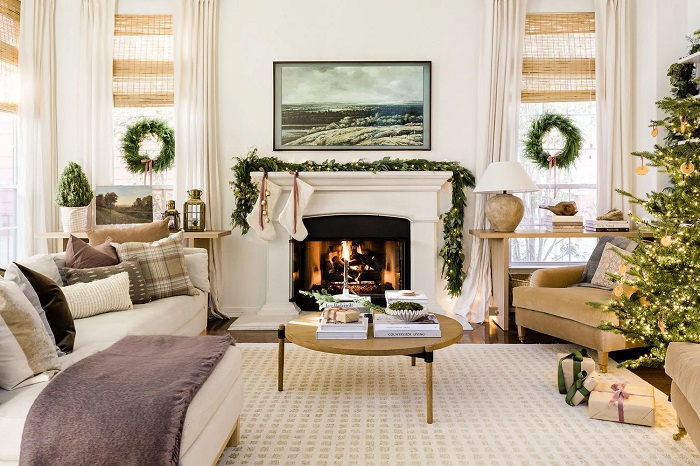
Rely heavily on evergreen boughs and aromatic botanicals that outlast the holidays. Clippings of cedar, juniper, white pine, and eucalyptus placed in water basins or woven into simple garlands bring vibrant green resilience into the house, lasting well into February if misted occasionally. Pair them with bare birch logs stacked neatly inside a copper bucket or fireside basket to introduce sculptural wood tones.
Layering becomes essential in winter. Layer a smaller plush sheepskin or high-pile Moroccan rug directly over an existing flatweave rug to create a cushioned, insulated sanctuary for bare feet. Set up dedicated zones for warmth: arrange an electric kettle or stoneware teapot on a dedicated wooden tray, keep thick wool slippers near the door, and place stacks of reading material next to comfortable reading chairs.

The Capsule Decor Approach to Seasonal Living

The key to sustaining year-round seasonal transitions without being overwhelmed by clutter is treating your home like a curated capsule wardrobe. You do not need an entirely new set of furnishings for every season; you merely need a versatile, neutral foundation and a few well-chosen accents that rotate in and out.
Invest in high-quality pillow inserts and interchangeable slipcovers. Storing ten fabric covers in a linen drawer takes up a fraction of the space required for ten full-size decorative pillows. The same logic applies to vessels: maintain three or four timeless, substantial vases in neutral materials like clear glass, raw stoneware, and aged brass. These vessels remain constant, while the seasonal branches, wild grasses, or bare twigs they hold change with the calendar.
Seasonal decorating is not an exercise in commercial acquisition. It is a slow, grounding practice of paying attention to the earth’s natural rhythms and reflecting that beauty within the spaces where you live, rest, and gather. When you align your home with the seasons through authentic textures, natural elements, and thoughtful light, your living space becomes a living, breathing retreat all year long.
read more
Decor Tips

Budget-Friendly Home Decor Ideas That Make Small Spaces Feel More Beautiful

Small-space living has long suffered from an unfair reputation. Compact floor plans—whether a downtown studio apartment, a cozy starter bungalow, or a modest bedroom—are routinely treated as restrictive compromises that require either expensive custom cabinetry or severe, joyless minimalism. In reality, square footage has remarkably little to do with whether an interior feels inviting, graceful, and expressive. What small homes lack in sprawling floor area, they make up for in intimacy and character, provided they are decorated with spatial discipline and thoughtful intention.
Transforming a modest footprint into a captivating environment does not demand a designer budget or structural demolition. It is an exercise in visual perception, proportion, and purposeful editing. By directing the eye through subtle architectural illusions, utilizing light, and prioritizing versatile furnishings, you can create a home that feels expansive, refined, and undeniably personal without overextending your finances.

Elevating Sightlines with Leggy Furniture and Slender Profiles

One of the quickest ways to suffocate a small room is to crowd it with heavy, blocky furniture. Solid upholstered sofas with low skirts, chunky farmhouse coffee tables, and monolithic armchairs anchor themselves like boulders, stopping the gaze cold at the perimeter of the seating arrangement. When the eye cannot see the boundary where the wall meets the floor, the brain automatically registers the room as cramped and confined.
To counter this, look for furniture with exposed, slender legs. Mid-century modern profiles, tapered wooden spindles, and minimalist metal frames lift the mass of the furniture off the ground, allowing continuous sightlines and ambient light to pass freely beneath each piece. A thrifted vintage armchair or a budget-friendly sofa with visible legs creates an immediate impression of breathing room.
Incorporating glass, acrylic, or wire-frame accent tables achieves a similar psychological effect. Their visual weight is practically zero, providing needed resting surfaces for drinks or books without visually consuming valuable floor space.

The Illusion of Height: Floor-to-Ceiling Drapery and Verticality

When horizontal real estate is at a premium, your greatest decorative asset is vertical space. Most builders install window hardware directly above the casing, cutting the wall visually in half and making standard eight-foot ceilings feel squat.
A transformative, low-cost trick borrowed from luxury hospitality design is to hang drapery high and wide. Install an inexpensive, minimalist curtain rod just a few inches below the ceiling line, extending the rod ten to fifteen inches beyond the outer edges of the window frame. Purchase extra-long, semi-sheer or textured cotton-linen drapery panels that brush the floor.
This simple adjustment tricks the eye into perceiving the windows as dramatic architectural features while drawing the gaze upward, making the ceiling appear significantly taller. By pulling the curtain panels wide during daylight hours, you maximize natural light exposure and give the illusion that the glass spans the entire width of the wall.

Expanding Space with Strategic Mirrors and Ambient Illumination

It is an established interior design truth that mirrors double perceived space, but their placement must be calculated rather than arbitrary. Simply hanging a small decorative mirror on a dark, enclosed hallway wall does little more than reflect shadows.
To maximize natural daylight, position a large mirror directly opposite or adjacent to a primary window. This placement multiplies the sunlight streaming into the space, projecting natural illumination deep into shadowed corners. You do not need to spend hundreds of dollars at high-end furniture boutiques; thrift stores, garage sales, and salvage yards are full of ornate vintage frames or plain plate glass that can be updated with a coat of matte black or antique gold spray paint.
Pair this reflected light with a diversified, multi-tiered lighting scheme. A harsh central ceiling fixture—the dreaded overhead flush mount—flattens a small room and accentuates its boundaries with unflattering shadows. Instead, scatter affordable, warm light sources around the perimeter at varying heights. A slender floor lamp in an unused corner, a petite task lamp nestled into a bookshelf, and plug-in wall sconces framing a sofa will cast pools of warm, indirect light that visually push the walls outward at night.

Color Drenching and Tonal Cohesion on a Budget

A pervasive myth in interior decorating suggests that small spaces must be painted stark, clinical white to feel larger. In practice, flat white walls in a room starved of direct sunlight can look dull, cold, and undeniably institutional.
A far more sophisticated and budget-friendly alternative is color drenching, a technique where you paint the walls, baseboards, window trim, and interior doors in the exact same hue. Using a single continuous shade erases the hard visual breaks created by contrasting white baseboards, blurring the architectural boundaries of the room.
Soft, complex neutrals such as warm taupe, muted sage, creamy biscuit, or even moody slate gray wrap the space in an unbroken envelope that feels intentional and tailored. Because you are only purchasing a few gallons of paint rather than replacing structural finishes, paint remains the single highest-return DIY investment for small-space enhancement.

Modular Wall Storage and Intentional Curation

Clutter is the primary adversary of beauty in compact quarters. When surfaces are overwhelmed by loose paperwork, electronics, and scattered knickknacks, physical anxiety replaces relaxation. However, standard freestanding bookcases often have deep footprints that jut into tight circulation paths.
Switch to slender floating wall shelves or modular rail systems that take advantage of empty wall height. Inexpensive pine boards from a local lumber yard, sanded and finished with an espresso or golden oak stain, can be paired with simple metal brackets to create custom vertical shelving for a fraction of store-bought prices.
The secret to making open shelving look elevated lies in negative space. Resist the urge to pack every inch with objects. Stagger horizontal stacks of paperbacks with upright novels, incorporate a trailing pothos plant to soften hard edges, and leave intentional voids between items to let the composition breathe.
Designing a beautiful small space is ultimately an exercise in editing and self-knowledge. In a large home, mediocre furniture and aimless decor get lost in the sheer volume of empty rooms. In a small space, every piece must earn its place through daily function, tactile comfort, or emotional resonance. By embracing elevated scale, harnessing natural light, and investing your time into smart styling rather than excessive retail purchases, you can craft a home that feels like an intentional jewel box—proving that true design elegance is never measured in square feet.
read more
Decor Tips

Color Palette Ideas for Harmonious Homes

Creating a harmonious home starts with the right color palette. Colors influence mood, perception of space, and even how connected a home feels. When thoughtfully combined, they bring balance, comfort, and personality into every room. Below are practical and timeless color palette ideas that help you design interiors that feel cohesive rather than chaotic.

Understanding Harmony in Home Colors

Color harmony is about visual balance. It doesn’t mean using one color everywhere—it means selecting shades that naturally work together.

Key principles of harmonious color design include:

  • Consistency across spaces without making rooms feel repetitive
  • Balanced contrast to avoid dullness or visual overload
  • Purpose-driven colors based on room function and lighting

A harmonious palette often blends a dominant color, a secondary support shade, and a subtle accent.

Neutral Color Palettes for Timeless Balance

Neutral palettes are the backbone of many harmonious homes. They create a calm foundation and adapt easily to changing décor trends.

Popular neutral combinations include:

  • Warm beige + soft white + muted taupe
  • Light gray + ivory + charcoal accents
  • Greige (gray-beige) + cream + natural wood tones

Neutrals are especially effective in open-plan homes, helping multiple rooms flow together seamlessly.

Warm Color Palettes for Cozy Living Spaces

Warm colors make spaces feel inviting and grounded. They work beautifully in areas meant for relaxation and socializing.

Effective warm palette ideas:

  • Terracotta + sand + soft clay
  • Muted mustard + warm white + walnut brown
  • Soft blush + cream + copper accents

These palettes enhance comfort, especially in living rooms, dining spaces, and bedrooms.

Cool Color Palettes for Calm and Clarity

Cool colors bring a sense of freshness and tranquility. They’re ideal for spaces where focus and calm matter most.

Balanced cool combinations include:

  • Soft blue + pale gray + crisp white
  • Sage green + off-white + light oak
  • Muted teal + stone gray + brushed metal accents

Cool palettes are excellent for home offices, bathrooms, and minimalist interiors.

Earth-Inspired Palettes for Natural Harmony

Earth tones connect interiors with the outdoors, promoting warmth and stability without overwhelming the senses.

Common earth-tone mixes:

  • Olive green + clay brown + linen white
  • Stone gray + sand + weathered wood
  • Rust + muted green + soft beige

These palettes shine in homes that emphasize natural materials, plants, and organic textures.

Using Accent Colors Without Disrupting Balance

Accent colors add personality, but restraint is key to maintaining harmony.

Best practices for accents:

  • Use accents in small doses (pillows, art, rugs)
  • Choose shades already present in adjacent rooms
  • Keep accents slightly muted, not overly saturated

Popular accent choices include navy, forest green, burnt orange, and deep plum.

Creating Flow Between Rooms

A harmonious home feels connected, even when rooms serve different purposes.

To maintain flow:

  • Repeat one core color throughout the home
  • Shift shade intensity, not hue, between rooms
  • Use similar undertones (warm or cool) across palettes

This approach allows variety while preserving unity.

FAQs

What is the best color palette for a small home?

Light neutrals paired with soft accents work best, as they reflect light and make spaces feel larger and more open.

How many colors should a harmonious palette include?

Most balanced palettes use three to five colors, including neutrals and accents.

Can warm and cool colors be mixed in one home?

Yes, as long as there is a unifying neutral or consistent undertone to tie them together.

How do I choose colors based on natural light?

Rooms with limited sunlight benefit from warmer tones, while bright rooms can handle cooler shades comfortably.

Are bold colors bad for harmonious interiors?

Not at all. Bold colors work well when used intentionally and balanced with calmer supporting tones.

Should ceilings and walls always match?

No. Slightly lighter ceilings often enhance height and openness without breaking harmony.

How often should a home color palette be updated?

A strong base palette can last for years. Updating accents every season keeps the space feeling fresh without repainting.

read more
Decor Tips

Home Style Magazines: Your Home With Much obliged

For the vast majority it doesn’t take long to acknowledge by glancing around at their home that upgrades are required. You should continue to put it off, however you realize your house is looking a little dated and that you need to refurbish. Many go to home stylistic theme magazines for thoughts and motivation.

Home style magazines and inventories let normal people like you and me look inside the mysterious universe of home enhancing. They offer accommodating tips and ideas we can utilize while redesigning our homes. The photos give us a reasonable comprehend, while the text guides us in our dynamic endeavors.

There are a bunch of home stylistic layout magazines in the magazine racks at your nearby book shop or magazine outlet. Beautifying thoughts proliferate on their pages, and delightful pictures rouse us further to be intense and challenging in our stylistic layout decisions. Lists additionally allow us the opportunity to purchase our products straightforwardly from them while we are at a fevered pitch to have their very room format down to the window hangings and floor covering.

You can discover magazines, for example, these online also, which incorporates online magazines or ezines just as commonplace printed magazine memberships which will come directly to your home.

New inside plan magazines are being distributed continually. A portion of the more well known assortment are recorded beneath.

Better Homes and Gardens – This magazine zeros in the peruser’s consideration on data about things property holders would be keen on, and their family. Thoughts for enriching your home and your nursery are incorporated. Better Homes and Gardens is likewise notable for their yearly distributions which cover specific subjects inside and out.

Nation Living – A month to month magazine packed with thoughts for country living, stylistic theme, artworks, collectibles and such. Incredible pictures. They remember tips for cooking also for those into something like that. This inside brightening magazine additionally subtleties furniture and window medicines, chimney, noteworthy shadings, engineering and texture.

Conventional Home – As the name suggests, this magazine is about chronicled homes and how to brighten them. They talk about places you can really visit to take notes and feel the mood of different conventional adorning styles. Specifically they talk about furnishings, window medicines, texture and shading plans.

Elle Stylistic layout – A semi-month to month distribution gave to present day plan, that inclines a little to the French style. Extravagance is the word. They expound on ways that run of the mill mortgage holders can change their home into these extravagance homes.

Also you might track down that these distributions offer experiences or points of view you discover satisfying:

House Wonderful

Southern Living

Engineering Review

Hint of Class Magazine

Domino Magazine

Metropolitan Home

One of the more famous inside plan lists, known for their modest home stylistic theme is Ceramics Outbuilding. Their stores are accessible in a significant part of the country. They offer a wide assortment of styles and costs.

You will likewise track down that many art magazines are useful as they tell not just the best way to create things you can use in your home, yet extraordinary photos showing those made things in manners you may discover supportive and motivating.

Shockingly there aren’t many free magazines accessible, yet you can discover a few bulletins to prefer online that might stay up with the latest on the most recent home style.

Home stylistic theme magazines give an extraordinary asset and motivation. Their master direction offer assistance while settling on choices about different procedures, bit by bit guidelines, and extraordinary thoughts which can assist you with accomplishing an ideal look.

read more
Decor Tips

Tips For Incredible Home Stylistic theme

Beautifying your house is quite possibly the most overwhelming task. The majority of the home style things are extremely famous among individuals. By changing a few things of your home one can acquire an incredible change one’s very own space. Indeed, even brief change in your home enrichment will cause you to feel new and reviving. Adorning your house is probably the most ideal method of changing the exhausted and tired looking space into restoring, new and glad air.

Home Beautification includes a few things like tones, furniture, texture and a few different frill. For certain individuals home stylistic layout might include a few thousand dollars while it simply takes some creative mind by certain individuals to roll out grand improvements.

Recruiting an expert home style individual is consistently a good thought yet it includes huge amount of cash. An expert decorator will definitely carry a stylish and lively climate to your home and they are very much aware of the most recent patterns. They have an exceptionally proficient perspective as contrast with a novice decorator as they have both experience and ability. They can change your exhausting, non-happening place into energizing spot to hang in.

One can likewise go for home improvement programming which will doubtlessly make your place a superior spot to live. The product so utilized can work on the shading, plans and a lot more things. The vast majority of the expert decorators utilize home style programming as they give careful thought regarding the perspective on your home after progress. This product likewise expands the vision of decorator as one can see the thoughts on the screen of the PC.

Home stylistic theme is chosen by the size of your home and you might require purchasing or warding the things off as indicated by the size of your home. In the event that the size of your house is tiny, you ought to go for an extremely straightforward and exquisite home style. You ought not go for adding extra enhancing pieces and furniture.

In the event that you own an exceptionally huge or huge measured home, one can orchestrate the things proficiently and still save some space. Enormous size homes resemble favors for home decorators. Home decorator likewise incorporates legitimate and right arrangement of viable and valuable things like furnishings, a few curios and electronic things of your home.

Embellishing stepping stools have turned into a hot top pick for home decorators nowadays. This might be because of the explanation that they give an incredible and natural look to your home and these can likewise be utilized for a very long time ways. Brightening shaping is one more method of upgrading the stylistic layout and it can likewise be utilized to feature specific provisions of your home. These are intended to add style and an extraordinary look to the dividers, floors and roof.

This is the most ideal method of improving and advancing the home. One thing to recall about embellishment is that assuming you are utilizing this on one thing in your room, it will be a good thought to utilize similar sort of trim on different things of the room.

read more
Decor Tips

Discover Motivation For Home Enriching From Many Sources

There comes a second in the existences of all home or loft tenants when they understand they essentially Should take care of their stylistic theme. That smudged earthy colored love seat, battered seat, and worn out orange shag carpets from school days must go!

Yet, how would you get everything rolling on an enhancing project for the home that will work on your inside climate just as express your character? The responses for home brightening motivation can emerge out of many sources. The way in to a fruitful home redesigning is to have the tolerance and perseverance to continue to glance through these sources until the thought styles and tones are found.

Certain individuals have a characteristic talent for home adorning. They love perusing enhancing magazines. They make week after week dates to watch their most loved enlivening shows on digital television. They even appreciate going to decorator show houses to see the most recent styles, from backdrop and upholstery texture to astute window medicines and lovely flower floor coverings. The fact is that all of these, and then some, can motivate a home finishing project.

One of the more affordable spots to begin searching for motivation is with inside enriching magazines. Try not to think you need to purchase magazines new as-is. Nowadays numerous urban areas and towns have used book shops where individuals exchange their books and magazines. These pre-owned book shops are incredible spots to discover improving magazines at fundamentally limited costs. Keep in mind, the best home beautifying styles have an exemplary air about them, so taking a gander at obsolete magazines can be the perfect ticket for picking a room stylistic layout plan.

Used book shops and public libraries are likewise great hotspots for books on inside enhancing. In the event that you believe you have a decent handle on the fundamental ideas of good inside enriching, like equilibrium and amicability, you can concentrate in a portion of the more particular procedures of beautifying. These might incorporate how to paint false completes, sew wonderful curtains or make your own reversible interlaced mats. Whatever moves you to start a venture is a decent spot to begin.

As well as perusing and checking out pictures for enhancing thoughts, a few visual experiences can move stylistic theme plans. These incorporate visiting model homes or creator show houses, taking a gander at photos of inside plans and watch enhancing or home makeover shows on television. It tends to be somewhat harder to hold the data from these sources, so make certain to take notes from on location visits and record Programs for regular audit.

At long last, web based perusing is one more way of get-together home designing motivation. You can look for different themes, visit explicit inside enriching sites, and even take an “online visit” of model homes and show houses. For example, a few paint makers and home improvement stores currently offer projects in which you can evaluate diverse shading plans for different rooms. Large numbers of these destinations offer email pamphlets and other accommodating warnings to keep on top of beautifying patterns.

Regardless rouses your home adorning mission, remember to be a savvy customer when it comes time to begin the venture. Counsel a few hotspots for your home adorning materials before you buy anything. Keep in mind, you need to gather the sort of open to, engaging home climate that you can live with for quite a while – until you’re prepared to rearrange!

read more