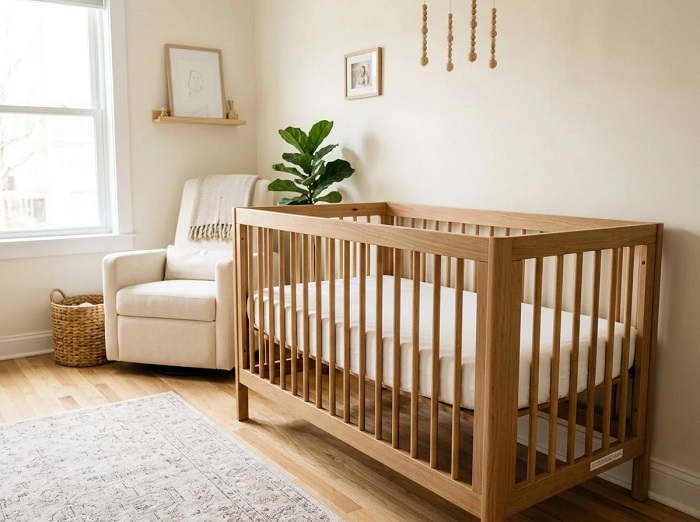
Few nesting rituals feel as rewarding as restoring a piece of furniture for a child’s nursery. Whether you are transforming a family heirloom rocking chair, refinishing a solid wood dresser, or giving a secondhand crib a fresh aesthetic, the process marries sentimentality with creative craftsmanship. Yet behind the appeal of pastel palettes and satin sheens lies a critical environmental consideration: indoor air quality.
Infants spend up to sixteen hours a day sleeping, playing, and breathing within their nursery. Their developing respiratory, neurological, and immune systems process air at a significantly higher rate per pound of body weight than adults, making them uniquely susceptible to chemical exposure. Furthermore, once teething begins around six months of age, crib rails and furniture edges inevitably turn into teething surfaces. Choosing the right paint is not merely a design decision; it is a fundamental health consideration that protects your child from toxic airborne compounds and ingested toxins.
Decoding Paint Chemistry: Beyond the Low-VOC Label
Navigating paint aisles can be an exercise in marketing confusion. Words like natural, pure, eco-friendly, and green are largely unregulated terms thrown onto labels to project an aura of safety. To protect your home’s air quality, you must look past the front of the can and evaluate the chemical mechanics of paint formulations.
The Limits of Conventional Standards
Historically, residential paints relied on petroleum-based solvents containing high concentrations of volatile organic compounds (VOCs). These carbon-based chemicals easily vaporize at room temperature, releasing gases that cause headaches, dizziness, and respiratory irritation in adults, while triggering asthma and allergic reactions in infants.
Federal standards regulate VOC levels primarily to curb outdoor smog formation, not to guarantee indoor human safety. As a result, a can labeled low-VOC can still legally emit significant levels of harmful solvents. More concerning is that regulatory testing often overlooks semi-volatile organic compounds (SVOCs), such as plasticizers and phthalates, which do not evaporate quickly but instead migrate slowly into household dust over months or years.
The Tinting Trap
A widespread pitfall in nursery furniture refinishing is the tinting process. A manufacturer may produce a certified zero-VOC base paint, but the moment a technician at the hardware store drops conventional universal tinting colorants into the can to create a custom shade, the chemical profile changes. Darker pigments and traditional tint bases often introduce substantial quantities of VOCs, biocides, and surfactants.
When purchasing paint, ensure that the retailer uses zero-VOC colorants alongside zero-VOC base cans. Without verified non-toxic colorants, an otherwise clean paint base loses its indoor air safety profile.
The Safest Paint Formulations for Children’s Spaces
Different furniture pieces demand different balances of chemical purity and mechanical durability. Understanding the primary non-toxic formulations allows you to select the right medium for the specific demands of your project.
True Milk Paint
Genuine milk paint represents one of the oldest, cleanest finishes available. Composed entirely of milk protein (casein), slaked lime, clay, and natural earth mineral pigments, authentic milk paint is sold as a dry powder that you mix with water before application.
Because it contains zero petroleum distillates, synthetic solvents, or chemical preservatives, milk paint is inherently zero-VOC and odorless. It absorbs deep into raw wood fibers, creating a soft, matte, breathable finish that will never peel or blister. For rocking chairs, decorative shelving, or vintage armoires, it delivers an unmatched antique character.
The limitation of pure milk paint lies in its adhesion: it requires porous, bare wood or the addition of a non-toxic waterborne bonding agent to adhere to previously painted or sealed surfaces. Additionally, because it is porous, milk paint requires a non-toxic protective topcoat to resist liquid spills.
Chalk-Style and Mineral Paints
High-performance mineral paints rely on finely ground ceramic minerals, calcium carbonate, and clay suspended in waterborne binders. Unlike conventional latex paints, premium mineral formulations cure into an exceptionally hard, moisture-resistant shell without requiring chemical sealers.
Mineral paints produce virtually no detectable odor and offer extraordinary adhesion, frequently bonding to sanded varnishes, laminates, and old finishes without heavy chemical primers. They provide a smooth, velvety finish that cleans easily with a damp cloth, making them a fantastic candidate for high-touch changing tables and toy storage bins. Always verify that the brand explicitly formulates its products without ammonia, formaldehyde, or heavy-metal drying agents.
100% Acrylic Zero-VOC Cabinet and Trim Enamels
For cribs, toddler beds, and high-use dresser drawers, surfaces must withstand serious daily abuse, frequent sanitizing, and mechanical abrasion. Modern waterborne 100% acrylic zero-VOC enamels offer the structural durability of traditional oil-based paints without their toxic chemical load.
Advanced waterborne enamels cure through cross-linking polymers rather than solvent evaporation. This creates a hard, scrubbable, chip-resistant finish that resists oils and stains. Look for products engineered specifically for interior architectural millwork and cabinetry, ensuring they carry independent safety verifications.
Independent Certifications That Guarantee Safety
Rather than trusting manufacturer claims, rely on rigorous, third-party laboratory certifications that test finished products for chemical emissions and heavy metals.
-
Greenguard Gold Certification: Unlike standard environmental claims, Greenguard Gold requires testing for more than 10,000 individual chemicals and volatile compounds. It enforces aggressive emission thresholds designed specifically to protect sensitive populations, such as children and the elderly, ensuring that finished surfaces off-gas virtually no hazardous vapors into enclosed indoor spaces.
-
Toy Safety Standard EN 71-3 Compliance: Originally established as a European standard, EN 71-3 is the international gold standard for children’s toys and furniture. It measures the chemical migration of nineteen toxic elements—including lead, arsenic, cadmium, mercury, and antimony—when a surface is exposed to simulated stomach acid. If a teething baby gnaws on a crib rail coated in EN 71-3 certified paint, you have third-party proof that toxic compounds will not leach into their digestive tract.
The Safe Refinishing Protocol: Preparation, Stripping, and Curing
Selecting a non-toxic paint is only half the battle. How you prepare the furniture and manage the curing process dictates the safety of the final piece.
Managing Vintage Hazards
If you are restoring furniture manufactured before 1978, assume the underlying finish contains lead-based paint. Never attack an antique piece with an electric dry sander, which pulverizes lead into invisible, microscopic dust that settles into floorboards and HVAC ducts.
Use an inexpensive lead swab test before beginning. If lead is detected, bypass sanding in favor of wet-scraping methods or hire a certified abatement professional. For non-lead finishes, avoid traditional paint strippers containing methylene chloride or N-methyl-2-pyrrolidone (NMP), both of which are potent toxins. Instead, choose bio-based paint strippers derived from soy or citrus compounds, which strip old varnishes without toxic vapor off-gassing.
Protective Topcoats and Sealers
If your chosen paint requires a protective sealer, select non-toxic finishes that cure safely. Pure, unboiled raw tung oil and cold-pressed hemp seed oil penetrate deeply into painted surfaces, creating a natural, food-safe, water-resistant barrier that will never release volatile gases. Alternatively, clear waterborne urethane finishes with Greenguard Gold certification offer maximum scratch protection for changing table surfaces.
The Critical Difference Between Drying and Curing
A common mistake made by enthusiastic parents is mistaking a dry finish for a cured finish. Paint dries to the touch within a few hours as water evaporates from the film. However, the chemical process of curing—in which microscopic polymer chains link together into an inert, chemically stable plastic matrix—takes anywhere from twenty-one to thirty full days.
During this curing window, trace processing compounds and residual moisture continue to migrate out of the paint film. Completing furniture projects at least four to six weeks before the baby arrives is the single best way to ensure optimal indoor safety. Keep the refinished piece in an empty, warm, well-ventilated garage or spare room with an open window to allow air movement, letting the paint finish its full cure long before it enters your baby’s sleep sanctuary.
Investing time and care into refinishing nursery furniture is an act of love. By selecting authentic zero-VOC mineral or milk paints, seeking out proven toy-safe certifications, and giving your piece adequate time to achieve an inert cure, you create a beautiful, durable heirloom that protects your child’s health from their very first night home.


