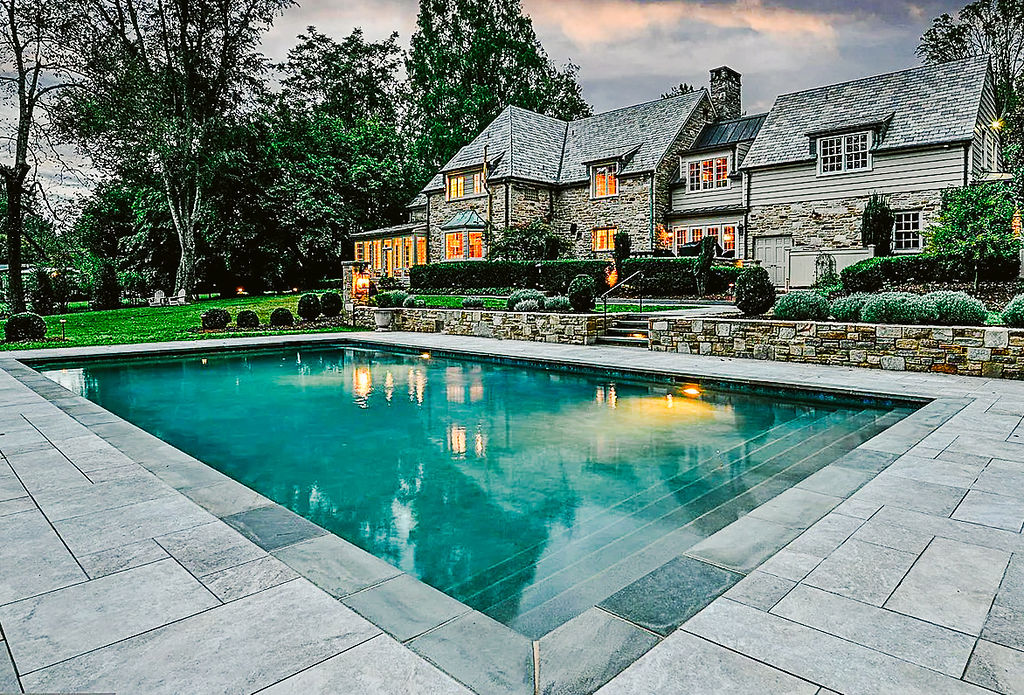
Custom Poolscapes aren’t just fun or weird pool shapes! If you’ve ever walked into a backyard that had a pool and felt like the whole space just worked together, chances are you were looking at a custom poolscape rather than just a pool that got dropped into the middle of some grass. There’s a real difference between the two, and it’s bigger than most homeowners realize until they’ve seen both side by side.
A poolscape isn’t just the water. It’s everything around it too.
Decking, patios, landscaping, lighting, seating areas, sometimes an outdoor kitchen or fire pit, all of it working together as one cohesive design instead of a pool sitting in isolation surrounded by whatever was already there. A custom poolscape takes all of these elements and builds them around your specific property, your specific taste, and how your family actually plans to use the space, rather than pulling from a generic template that could belong to any house on the block.
This is really the core difference between a standard pool installation and full poolscape design. A standard installation is focused almost entirely on the pool itself, the shape, the depth, the basic mechanics. Poolscape design zooms out and treats the entire backyard as one connected project, thinking about how you’ll move from the house to the water, where you’ll sit when you’re not swimming, how the space looks from inside your kitchen window, and what it feels like at night once the lighting kicks in.
So why does this matter enough to be worth the extra planning and cost.
For one, it just looks dramatically better. A pool sitting on a plain concrete slab with nothing else going on tends to look unfinished no matter how nice the pool itself is. A custom poolscape ties the water into stone or paver decking, layers in plantings that soften the hard edges, and often includes a seating or lounging area that gives the whole space a reason to exist beyond just swimming laps. The visual difference between the two approaches is honestly one of the first things people notice when they start comparing photos during the planning stage.
There’s also a functional argument here that’s easy to overlook at first. A pool by itself is just a pool. A well-designed poolscape becomes an actual outdoor living space, somewhere you’d want to spend an entire afternoon or evening, not just the fifteen minutes you’re actually in the water. Shade structures, outdoor kitchens, fire features, and comfortable seating all extend how much use you get out of the space across the day and across the season, which matters a lot if you’re trying to justify the investment to yourself or your spouse.
Property value tends to come up in these conversations too, and for good reason. A generic pool installation adds some value to a home, but a thoughtfully designed custom poolscape tends to add more, because buyers are responding to the entire experience of the backyard rather than just the presence of water. Real estate agents in warmer markets will often say the same thing, that a cohesive outdoor living space reads as a finished, move-in-ready feature, while a standalone pool without any surrounding design can actually read as an unfinished project that still needs work.
Custom poolscapes also solve a problem that a lot of homeowners don’t realize they have until they’re deep into the process, which is that most yards aren’t naturally suited to a generic pool shape. Sloped lots, mature trees you don’t want to remove, narrow side yards, oddly shaped lots near a property line, all of these things complicate a standard installation. Good poolscape design works around these constraints instead of ignoring them, sometimes turning what looked like a limitation into an actual design feature, like a retaining wall that becomes a natural seating ledge or a sloped section that turns into a tiered patio.
Lighting deserves its own mention here, because it’s one of the most underrated parts of a custom poolscape and one of the easiest to skip if you’re not thinking holistically. Underwater lighting, path lighting, accent lighting on retaining walls or plantings, all of it changes how the space feels once the sun goes down. A pool that looks nice during the day but goes dark and uninviting at night isn’t really finished. Good poolscape design treats evening use as seriously as daytime use, since a lot of actual entertaining tends to happen after the sun sets anyway.
Materials matter more in a custom poolscape too, since everything needs to feel cohesive rather than mismatched. The decking, the coping around the pool edge, any retaining walls, and the patio areas should generally work together in terms of color and texture. This is one of the areas where working with a designer who thinks about the whole picture really pays off, because it’s easy to end up with a nice pool surrounded by decking or stonework that clashes with everything else once it’s all actually installed.
Water features add another layer worth thinking through during poolscape design. Waterfalls, sheer descent features, bubblers, and fountains all bring movement and sound into the space, which changes the whole atmosphere in a way that’s hard to appreciate until you’ve actually experienced it. Not every custom poolscape needs these features, but they’re worth at least considering during the design phase rather than trying to retrofit them later, since a lot of the plumbing and structural work needed for water features is much easier to build in from the start.
Outdoor kitchens and fire features have become increasingly common additions too, and it’s easy to see why once you think about how people actually use these spaces. A poolscape that includes a grill, some counter space, and maybe a fire pit or fireplace nearby turns the backyard into a legitimate entertaining venue instead of just a place to swim. Guests end up gathering around the food and fire just as much as the water, which spreads out the energy of a get-together and keeps the space feeling lived in even when nobody’s actually in the pool.
Budgeting for a custom poolscape does take a different mindset than budgeting for a standard pool. You’re planning for the pool itself plus decking, landscaping, lighting, and whatever additional features you want, all as one connected project rather than a series of separate purchases down the road. It’s a bigger number upfront, but it tends to be more cost effective than adding these elements piecemeal over several years, partly because contractors can coordinate everything at once instead of tearing things up repeatedly to add features later.
Timeline is another thing worth setting expectations around early. A full custom poolscape takes longer than a basic pool install, sometimes significantly longer depending on how many elements are included and how complicated the site conditions are. Site prep, excavation, plumbing, decking, landscaping, and lighting all need to happen in a specific sequence, and rushing any of these steps tends to show up later as problems that are expensive to fix after the fact.
Finding the right team for this kind of project matters more than people expect going in. Poolscape design isn’t just pool installation with some landscaping tacked onto the end. It requires a level of coordination between different trades, from excavation and plumbing to masonry and electrical work for lighting, that a lot of standard pool companies simply aren’t set up to handle well. Looking for a contractor who specifically talks about designing the whole outdoor space, not just installing a pool, is usually the clearest signal that you’re working with someone who understands what a real custom poolscape actually requires.
At the end of the day, the appeal of a custom poolscape comes down to treating your backyard as one complete space instead of a pool with some extra stuff around it. It’s a bigger commitment than a standard installation, both in cost and in planning, but the payoff tends to be a backyard that actually gets used year round, looks finished the moment it’s done, and holds its value a lot better than a pool sitting alone in the middle of an unfinished yard ever could.